sdandrea1 but I'm not convinced that is high-functioning hackers can.
Either it's psychological and I'm swinging more consistenlty since I spine alligned my set or it really does get shot dispertion a bit tighter. I guess it all depends on the quality of the shaft : the smaler the spine, the less it matters.
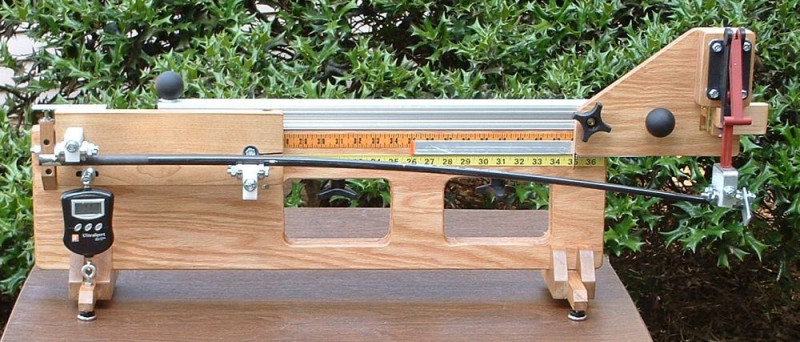
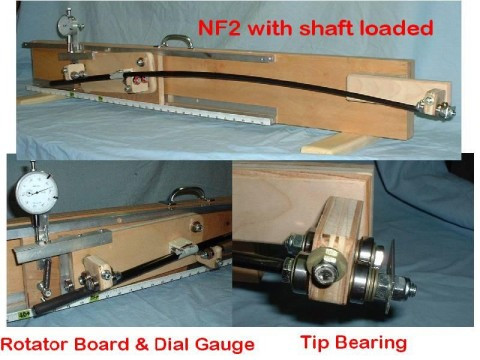
That's one of the reasons I prefer a spine allignment tool, one can 'feel' how much force it takes to rotate the shaft to NBP. Little force means a pronounced spine and I allign the shaft, if much force is required I do not bother. FLO with frequency meter gives you a cpm difference, but two shafts with 2cpm difference in the FLO planes can have a totally different 'feel' on a spine finder.
scotts33 Feel finding -- to paraphrase H.L. Mencken -- is quick, simple, and wrong. It gives wrong directions if the shaft has any residual bend.
Agree but IMO if a shaft has residual bend, this also plays a role and needs to be taken into account when properly installing a shaft. FLO finds the axis of min and max stiffness - spine finds the NBP taking into account all the flaws of the shaft.
The best argument for spine finding over FLO comes from fishermen (where spine finding originates) that when casting a fly one does not oscillate the fishing rod at a couple of hundreds cpm, but one loads the rod (bends it) and releases it (rotates it into NBP) once every cast; and that's exacly what a spine finder mimics. Very similar to what happens during a golf swing.